
Friday, September 6, 2013
Joe Vitale's Visit

Wednesday, August 21, 2013
'59 Sunburst Replica

The original Les Paul Standards are legendary. All the guitar heros had one, I want one too! They are so collectible and expensive it is not possible for me to own a real one. Fortunately, unlike most people, I have the guitar building chops to make myself a really accurate copy. It was a labor of love and now I am enjoying the results.

I have built a few of these guitars in the past. For this project I decided I wanted to be super authentic in the execution. I started by reading "Beauty of the Burst" which is a book that thoroughly documents '58 through '60 sunbursts. I also read a 300 page build thread by Gil Yaron in the Tele forum that inspired me. I decided to copy all the details as closely as possible and not to make any "improvements" to the iconic design.

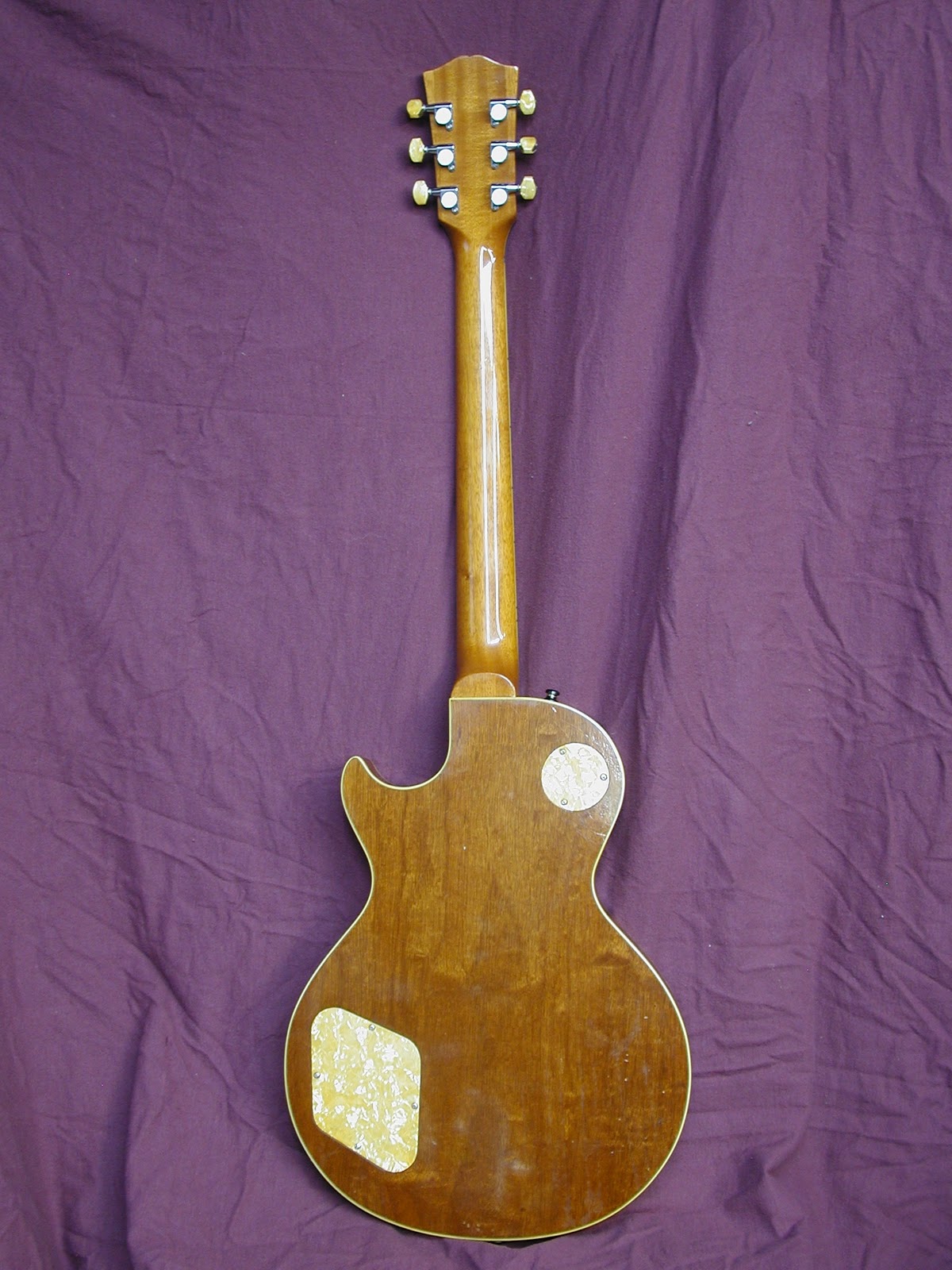
Fortunately I have been saving the appropriate wood for quite some time. The neck and body are made from Genuine Mahogany that I have seasoned at least 10 years. The top is flamed hard maple that I bookmatched. The fingerboard is chocolate colored Brazilian Rosewood that I had put away for something special. The wood is all lightweight and the guitar weighs in at 7.5 lbs. I love light guitars. The inlays are cut from vintage celluloid and the headstock has a thin holly veneer as per the original.

I used a no wire ABR-1 bridge and a light weight tailpiece. They are required if you really want a vintage sound. I used modern Gibson PAF copies for pickups; a PAF pro at the bridge and a Burstbucker 1 for the neck position. I aged the nickel plated parts to a light patina.

I copied the original binding style, showing the maple in the cutaway. You can see the hide glue between the neck and body binding. The fingerboard uses the exact 50's scale and fret placement.
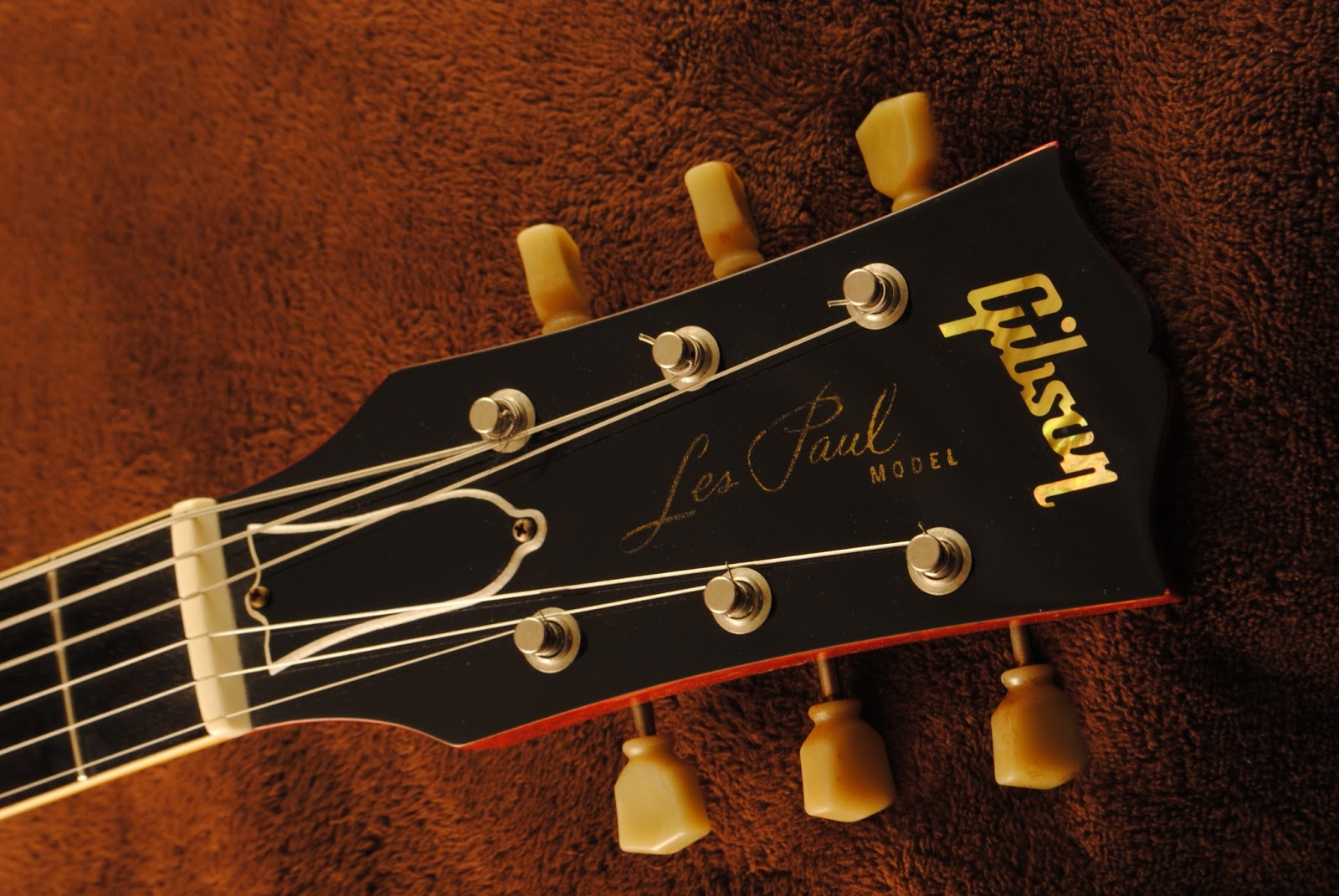
The logo was silk screened over the lacquer.

The extended dovetail extends under the neck pickup. Maple was used for the truss rod filler.

I found some vintage bumblebee capacitors that really sound great.

So now you are asking "How is it? Did it pay off?"
Absolutely! The combination of materials and construction techniques really pays off. The sound is very loud acoustically and sings with a mid peak. The the sound of the bridge and tailpiece combine with the Brazilian Rosewood and hide glue to really resonate. It is very open and resonant and responsive. It's light weight, really balances well yet retains that solid feel we associate with a Les Paul. The sound electrically is unbelievable. It is fat and flutey. The tone controls really sound great, when you roll a little treble off, it really starts sounding like all the best woman tones you could never quite find. Full on it sounds rock and roll, even with the amp set clean. I hope I can afford to keep it.
Thursday, September 27, 2012
Snakehead Esquire

I have been looking at all the prototype Esquires a while. The pine bodies and the Cabronitas with a Dearmond pickup both got me interested. I decided to do my own take on the prototype Esquire. I wanted to build something really cool that is lightweight and awesome sounding. I wanted to apply what I have learned from 30 years of building to the most simple of guitars. It’s not a complicated guitar but one where every single detail counts, a lot. Simplicity can be beautiful, crude, and perfect all at the same time.

As I said, it is a simple guitar but simple machines are often the best. One volume control, a pickup, a bridge, tuners, some hardware… not much else. The body and neck represent all the wooden parts. Each and every part was carefully chosen to enhance not only the aesthetic value but also the performance of the guitar.

I decided to make the body from a single piece of western red cedar. I chose it because it is super light weight and very resonant. It is used often for acoustic guitar tops and is known as a dark, resonant tonewood. The neck is one piece hard maple with a walnut skunk stripe, three on a side. I used the new Waverley tuners that look closest to the Fender 3 on-a-plank I could find. The pickguard is made from thin phenolic capturing the appearance of the old bakelite Fenders. I finished them in nitrocellulose lacquer, leaving as thin a film as possible.

The bridge is the most important piece of hardware on this guitar. I chose a heavy stainless steel string-through plate and 3 brass saddles. I also used a heavy stainless steel neck plate, important due to the softness of the cedar body. The stiff plate allows for much more tension to be used without crushing the body. I chose a Dearmond Hershey Bar pickup from a Silvertone. It looks cool and sounds terrific. It is cleaner and more acoustic sounding than a Broadcaster or Tele, but with a little bark if you hit it hard. Assembled it weighs a very comfortable 5 lbs 8 oz. The guitar is very resonant, you feel it vibrate when you play it, like a great acoustic guitar.


Monday, October 31, 2011
Alejandro Escovedo's Les Paul
Alejandro asked me to build him a guitar like a Les Paul Custom only lighter and better to play on stage. This guitar would be traveling a lot and needed to be rugged. I built him a guitar basically off my jigs for making a late 50's Les Paul Standard. It is slightly thinner and the Maple top is only 1/2" thick over the mahogany back. The neck is stiffened with carbon fiber to give it added stability and a more articulate tone. He played it a lot and decided the humbuckers didn't really work with his rig. He brought me some records with the tone he was after on them. We listened and eventually we found some Dearmond Pickups from the 60's that have all the aggressive tone we were looking for. I fabricated some plates to mount them in the humbucker rings and wired them up. It looks like this:


The headstock inlay art is a representation of Al's tattoo, he uses this art a lot as his mark.


Monday, October 24, 2011
More Photos of Joe Walsh's Esquire


Joe Walsh's Esquire
 I met Joe Walsh working as guitar tech for him. He flew in to do Ray Wylie Hubbard's Grit and Groove fest and I helped get the guitar related gear in order. At the end of that week Joe Asked me to buid him an Esquire with a P-90 instead of the standard Fender style pickup. We talked and ended up using a vintage Dearmond pickup instead. He liked it enough to use it for photos promoting his current tour. Here are some photos of the results
 This is the Callaham bridge I hacked to make room for the Dearmond Pickup. It was designed to be a soundhole acoustic guitar pickup. It is very shallow and requires no routing of the body.
 I chose a highly flamed piece of maple for the neck. It is reinforced with carbon fiber truss rods.
 It ended up looking like this. I front mounted the controls and made a thin pickguard from phenolic resin, it looks like bakelite.
 The back has a control cover, recessed string ferrules and a thick stainless steel neck-plate.
Monday, February 28, 2011
Alejandro's New Ebony Bridge

I built Al the Les Paul Style and he has been playing it a lot. I had carved an aluminum bridge that sounded great but was breaking strings. The Metal was too soft and aluminum can be sticky. I decided to make a bridge using saddles made of bar fret I had left over from refretting old Martins. I made a split saddle for improved intonation and pinned the bridge to the top under the feet. The new bridge sounds better than before, less ringing a little more precise in articulation.
Thursday, February 24, 2011
Rose Pickguard

This was taken with my phone, apologies for the quality. This is going on a Jumbo acoustic I am building for Chellie Rose. The pickguard is made from phenolic resin which doesn't dampen like plastic. The shell used is Paua Abalone, white and yellow mother of pearl.
Wednesday, February 16, 2011
Harmonics
stunning bass-string shot from urbanscreen on Vimeo.
I found this video of a bass string vibrating. See how harmonics work? The waves visible when the string is plucked are harmonic waves, a fraction in length to the fundamental tone caused by the total length of the vibrating string. I would also like to point out how wide the sting swings. This illustrates clearly why instruments buzz against the fingerbaord or frets, the mortal enemies of luthiers is exposed quite clearly. I don't mean for this as an excuse for a buzzing guitar, but...Yes I do.
Thursday, December 2, 2010
Sold the Snake
I built the Snake guitar to be somewhat of an experiment, an example of what I can do given the opportunity. I wanted to keep it for a while so I could learn from what I had built. I did one gig with it and it worked very well, both regarding the intonation and the tone. It stayed in tune and was very articulate in the noisy environment. I played it a lot at home and showed it to some friends to play while I could listen. It was a great experience and fruitful experiment as well. I wouldn't change anything, it is an example of my best work. The sustain and articulation is by far the best I've done. The next piece I undertake will definitely utilize the improvements I've made here.

I let my friend Pat O'Bryan play it and we talked about the tone and the way the string bending tension was softer feeling and easier to hit a pitch with. Pat told Joe Vitale about it, he saw the photos here and scheduled an appointment. I hated to let my baby go but Joe is persuasive. I sold him the guitar. Thanks for supporting the arts Joe! Thanks Pat for the photos.

This is me signing away my newborn, a difficult proposition. Joe will take care of the guitar, she will have a good life. Now I have to begin again, a new start. See you soon.
Tuesday, November 2, 2010
The Beaumonts Halloween Show
I recorded the halloween show at the Triple Crown in San Marcos, Its free here.
Sunday, October 31, 2010
Ray Wylie Hubbard

Ray came by to check The Snake, we played some blues on it. The split coil humbuckers sound really good, better than I expected. The shortened adjustment screws and the aluminum mounting plates clean up the sound the humbuckers, they are now less grainy, less obscured dynamically. The wood is softening in tone daily, I will post some sounds soon.
Friday, October 29, 2010
Snakes
< 
After I made Alejandro Escovedo's custom LP, I wanted to do one similar but my way. I decided to use a slightly smaller body with more a Zamaitas shape and not too heavy. I also thinned the body about 1/4" fro 50's Gibson speck. The body has many small cavities inside, completely sealed and too small to make problematic standing waves. It is stained all black with ebony binding. Polished aluminum fitments were used for bridge and tailpiece. The Mahogany neck is carbon fiber enforced internally, mounts with an extended dovetail. Basically a guitar where I got to call all the shots to look and work the way I need it to. The Snake Guitar.

I have been repairing a lot of 19th century guitars and have become convinced to employ some the older techniques. First they use no metal in the necks. They are generally reinforced with ebony and it sounds better all the time. It is better, you can hear the difference easily. I use Carbon Fiber instead of ebony because it sounds very similar but adds more stability to the neck. The carbon fiber resists the inherent tendencies of woods to shrink and creep out of original shape as well as string tension. The process clicks into unity by hand making the bridge and nut to the shape of the neck held consistantly straight despite the weather. The second technique I take from the older luthiers is the use of carved, non adjustable bridges. A modern Tune-o-matic style bridge pales in tonal comparison to a single piece bridge resting firmly against the body, every time. By elimenating neck movement I am able to make the bridge once to set the action where it basically stays. Small adjustments can be made to the action by cutting the brige slots or shimming in between the bridge and the body.


The tailpeice I carved from billit aluminum, it gives the strings some length before the bridge which sounds great. It anchors to a "hook" which recesses into the tailpeice, then covers it up.
 The guitar is made from my private stash of Genuine Mahogany except for the Maple top. The fingerboard is ebony. The guitar is bound in Ebony and Maple strips, the rest is stained black. The finish is 100 percent old school nitro-cellulose, no urethane, no acrylic, no hardner. It is very thin and hand polished.
 The guitar is made from my private stash of Genuine Mahogany except for the Maple top. The fingerboard is ebony. The guitar is bound in Ebony and Maple strips, the rest is stained black. The finish is 100 percent old school nitro-cellulose, no urethane, no acrylic, no hardner. It is very thin and hand polished.
> The nut is polished bone, the snake inlay is mother of pearl, the tuners are Gotoh 510 21:1 ratio gears. There is no truss rod adjustment as there is no adjustable rod. The headstock angle is 14 degrees which sounds great and stays in tune best.

 The nut is polished bone, the snake inlay is mother of pearl, the tuners are Gotoh 510 21:1 ratio gears. There is no truss rod adjustment as there is no adjustable rod. The headstock angle is 14 degrees which sounds great and stays in tune best.

Both covers and the jack plate are polished aluminum and recessed into the mahogany body. I am now playing in the guitar and it is quite a joy.
Subscribe to:
Posts (Atom)